

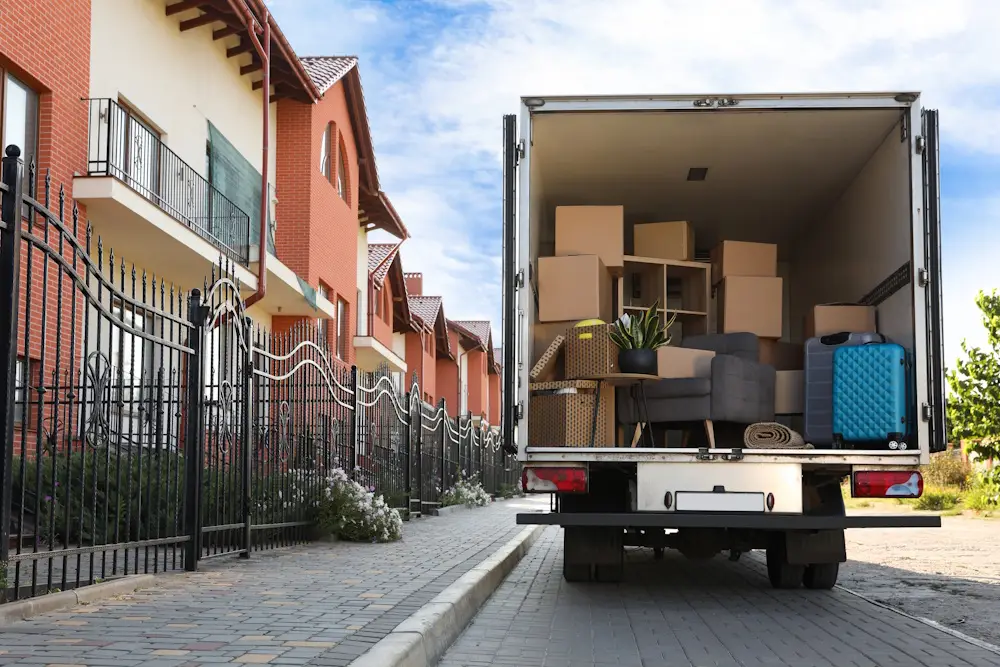
Do movers make two trips when the truck runs out of room? They can, and on local moves it happens more often than the industry likes to admit. Watching a crew close the door on a full truck while your patio set sits in the driveway is a special kind of moving-day stress. Here is what actually happens in that moment, why it happens at all, and how the right estimate makes the whole question disappear.
Do Movers Make Two Trips on Local Moves?
Yes, a second trip is the standard fallback when a local move outgrows its truck. Local moves bill by the hour, so the crew simply delivers the first load, drives back, and loads what remains. Nothing gets left behind. The catch is time. A return trip adds driving and loading hours to your bill, which stings when better planning could have avoided it.
Long-distance moves work differently. Nobody drives back across three states, so those trucks get sized with extra care and overflow rides on a second vehicle from the start.
What Happens If the Truck Fills Up Mid-Move?
A professional crew works the problem in a set order. First, they load smarter. Experienced movers treat truck space like a puzzle, and a skilled load can recover a surprising amount of room, which we broke down in how to load a moving truck like the pros. Second, they call the office. Depending on schedules and distance, dispatch either approves a second trip or sends another truck to close the gap.
Either way, your job is to stay calm and keep the crew informed about what matters most. Priority items go on the first load, so your beds and kitchen arrive even if the garage shelving waits an hour.
Why Does a Move Outgrow Its Truck?
Fill-ups trace back to information gaps, almost every time. The usual suspects:
- A guessed estimate. A price quoted from a two-minute phone call was never based on your real inventory.
- Hidden spaces. Attics, sheds, crawl spaces, and storage units hold more than anyone remembers.
- Move-day additions. The stuff you decided to keep at the last minute never made it into the plan.
- Box math. Most homes produce far more boxes than their owners predict, and boxes eat truck space fast.
None of these are character flaws. They are exactly what a proper estimate process exists to catch.
How Do Movers Make Sure Everything Fits the First Time?
The answer is an inspection-based estimate. Federal guidance is clear that a real estimate must be based on an actual or virtual inspection of your belongings, and there is a practical reason behind the rule. Seeing the inventory is the only way to size the truck, the crew, and the hours correctly.
You Move Me builds every move this way. Our smart-technology estimates run virtually, by self-survey, or in person, and our trained team plans exactly how many trucks your move needs before anyone lifts a box. Crew sizing follows the same logic, which we covered in how many movers a 2-bedroom apartment needs. Right-sized trucks and right-sized crews are why our moves finish in one trip.
What Can You Do to Help Everything Fit?
Four habits protect you from the second-trip scenario:
- Show every space during the estimate. Open the attic, the shed, the garage rafters, and the storage unit. Surprises on move day started as skipped rooms on estimate day.
- Declutter before the estimate, not after. An estimate built on stuff you later donate oversizes the truck. One built before you purge undersizes it.
- Flag changes early. Keeping grandma’s hutch after all? One call before move day updates the plan painlessly.
- Finish packing before the crew arrives. Sealed, stackable boxes load tight. Loose items and open bags waste space in every direction.
One Truck, One Trip, Zero Guesswork
The best answer to the two-trip question is never needing to ask it. Our estimates are built from your actual belongings, our trucks are sized to match, and our W-2 crews load like it’s a craft, because it is. That approach has earned 38,000+ 5-heart reviews across the US and Canada. Get your free estimate or call (800) 926-3900, and let’s fit your whole life on one truck for your Best Move Ever.