

It Starts With Where You’re Headed
Can you move plants across state lines? Yes, in most cases, but your destination state sets the rules. Some states inspect plants at the border, and a few ban certain ones outright. So the honest answer depends on your plants and where they are going. You Move Me can move plants too, though many people carry them on a long move. Below, we cover the rules, the strict states, and the smartest way to handle it. We also explain when to let us load them and when to bring them yourself.
Why States Regulate Plants at the Border
Plant rules exist for one big reason: protecting local agriculture. Pests and disease hitch a ride in soil and on leaves. One invasive bug can wreck a state’s crops and cost millions. The spongy moth is a classic example, and the USDA tracks it closely. States that lean on a single crop guard their borders hardest. Think citrus in California, potatoes in Idaho, or corn in the Midwest. So the rules are not red tape for its own sake. They keep a small problem from becoming a regional one.
Which States Restrict Moving Plants
Every state writes its own plant rules. California, Arizona, and Florida are the strict ones. Some states allow only plants grown and kept indoors. Others require fresh, sterile soil before a plant can enter. A few ban specific plants, like citrus, altogether. The rules also shift based on pests in your home state. So the only safe move is to check your destination state first. Look up its department of agriculture, or start at the National Plant Board. A five-minute check now saves you a fine or a confiscated plant later.
Do Your Plants Need an Inspection or Certificate?
Some moves require proof your plants are pest-free. This is common when you leave an area under a pest quarantine. The USDA may ask for an inspection and a certificate before the plants travel. You can inspect the plants yourself, or hire a USDA-certified applicator. The right path depends on your plants and both states involved. So confirm the details with APHIS before you pack a single pot. The National Plant Board lists each state’s rules in one place. A little homework here keeps your move smooth and legal.
Can Movers Take Your Plants?
So can movers move plants? Here is the honest answer most sites skip. We can, but they are tricky cargo. A closed truck has no light, no fresh air, and big temperature swings. Over a few hours that is fine. Over a multi-day haul, it is hard on living plants. So on a long-distance move, we often suggest you carry them yourself. On a local move, they ride along with the rest of your home with no trouble. We tell you which makes sense for your move, upfront. That way your plants arrive healthy, not wilted.
How to Move Plants Yourself Across State Lines
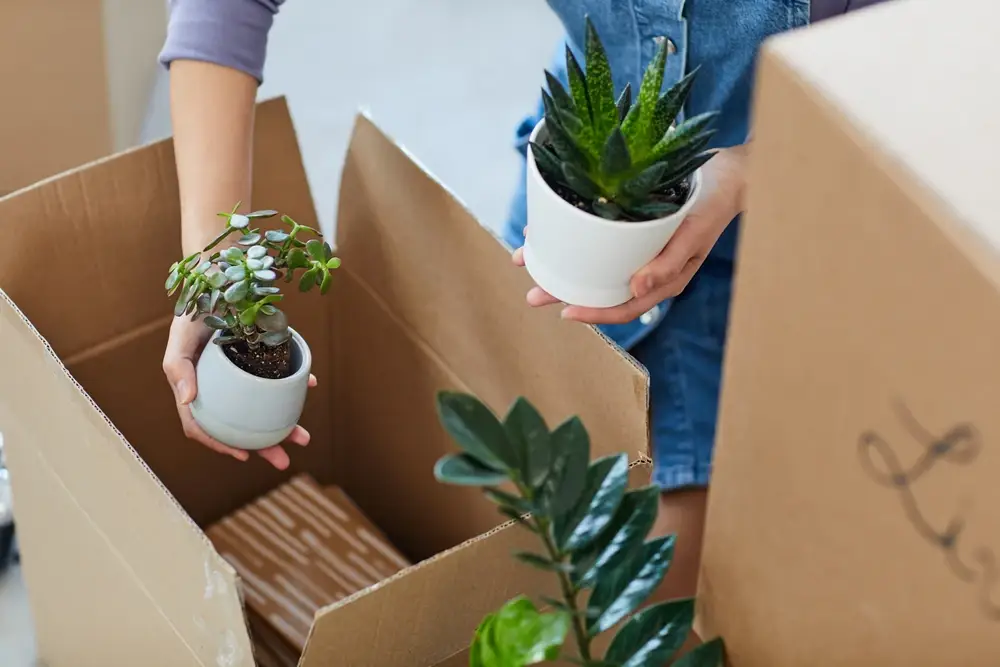
Moving plants across state lines yourself takes a little prep. For the plants you carry, that prep pays off fast. Repot into fresh, sterile soil a couple weeks ahead. This meets many state rules and cuts the pest risk. Water lightly a day or two before you leave. Stand the pots upright in open boxes or crates. Keep them in your car cabin, never a hot trunk. Check moisture and light at your rest stops on long drives. Keep them easy to reach in case of a border inspection. A little care keeps your houseplants alive and your move legal.
Let You Move Me Handle the Rest of Your Move
Here is the simple split. You handle the plant rules and the plants you carry. We handle everything else in your home with care. Our trained, W-2 crews move your furniture, boxes, and belongings the right way. We protect your floors and walls, and we keep your pricing honest with no hidden charges. You hear our advice on plants upfront, never as a surprise on move day. That kind of honesty is why our customers leave us 5-heart reviews.
Planning a move to a new state? Our team takes the weight off your shoulders so you can focus on your plants and your family. Learn more about our long-distance moving services, then grab a free, no-pressure quote on our free estimate page. You can also call us anytime at (800) 926-3900.