

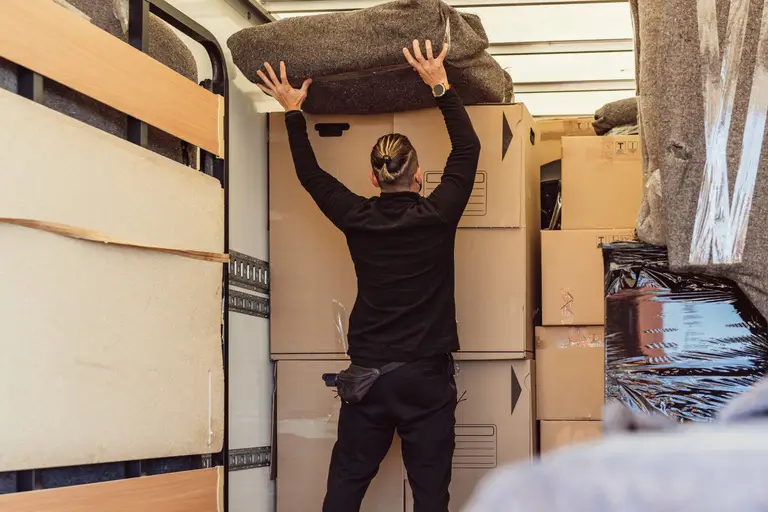
Some moves are straightforward. Couches, boxes, beds, and the usual assortment of household furniture load up without much drama. Then there are the other items. The ones that are awkward, fragile, oddly shaped, or just genuinely difficult to pack without a plan. At You Move Me, we’ve moved just about everything, and here’s how we handle some of the most challenging items we come across.
1. Wooden Canoes
Few items present quite the challenge of an old wooden canoe. They’re heavy, awkwardly shaped, and highly susceptible to scrapes, dents, and pressure damage if they’re not packed correctly.
The most important thing you can do is cover all exposed wood surfaces with moving pads, creating a barrier between the hull and anything that might rub against it in transit. For space, position the canoe lengthwise above your other items on a level surface to maximize the available room in the truck. Once it’s up and secured, strap it down and you’re good to go.
2. Homebrewing Equipment
Homebrewing gear, whether you’re fermenting beer, cider, wine, or mead, comes with its own set of moving challenges. Glass carboys, oily bottle jacks, bags of hops and yeast, and the kind of elaborate setup that takes a full afternoon to assemble can all be fragile, leaky, and genuinely tricky to transport safely.
The key is isolation. Anything that leaks, drips, or shifts gets treated separately. Carboys need to be secured so they won’t rattle or roll, with cardboard placed between them to prevent glass-on-glass contact. Oily or messy items get wrapped tightly in a plastic bag before being packed into their own box. For the gear setup itself, secure any parts that could shift during lifting and carrying. The more stationary you can make it before it goes on the truck, the better.
3. Bikes. So Many Bikes.
What starts as one bike has a way of multiplying. Before long you’ve got a road bike, a mountain bike, a commuter bike, a backup bike, and a few others that are harder to explain. Moving all of them without fully dismantling each one takes some strategy.
The good news is bikes are well suited to being loaded last. They stack well on their side above other items and tend to fit neatly at the end of a packed truck. If you have a high-end ride, wrap the frame in moving pads and tuck some cardboard under the mechanical components for added protection. Avoid dismantling unless you have to, since loose parts have a way of disappearing on move day.
4. Fragile Art and Sculptures
Large paintings, sculptures, and one-of-a-kind art pieces require extra care, especially when the structural integrity is uncertain or the paint hasn’t fully cured. These items can damage themselves and everything around them if they’re not packed correctly.
Isolation is your best approach. If a sculpture fits in a box, it gets its own box with plenty of packing paper. If it doesn’t fit in a box, wrap and pad it completely on all sides. For paintings with tacky or wet surfaces, use light stretch wrap and box them separately with packing paper padding throughout. The less contact these pieces have with anything else in the truck, the better.
5. Mounted Animal Heads
Taxidermied mounts with full antlers are genuinely tricky to move. The antlers are fragile, they protrude at unpredictable angles, and they have a talent for damaging themselves and everything nearby if they’re not secured properly.
Wrap and pad thoroughly. A moving blanket secured with stretch wrap will protect the mount and keep the antlers from making contact with anything else. Load it on top of your packed items in the truck so nothing can press against it from above, and you should be in good shape.
When in Doubt, Call the Pros
Unusual items require extra planning, the right materials, and experience handling things that don’t fit neatly into a standard moving box. If you have awkward, fragile, or high-value items that need to move safely, You Move Me’s team has the training and the equipment to get them there in one piece.