

One Owns the Trucks. The Other Doesn’t.
The difference between a moving company and a moving broker comes down to who actually shows up at your door. A moving company owns the trucks, employs the crew, and handles your move from estimate to final box.
A broker doesn’t own any of that. They take your booking, collect a deposit, and sell the job to a separate company you’ve never spoken to. Both are legal. Only one is accountable to you when something goes wrong.
What a Moving Company Actually Does
A moving company, sometimes called a carrier, is the business that physically performs your move. Carriers own the trucks, employ the crew, and handle everything from packing to delivery.
When you hire a real mover, you’re hiring the people doing the work. The price quoted comes from the company responsible for the move. If something gets damaged, you file a claim with the same company that picked up your stuff. There’s a single line of accountability from start to finish.
Real movers also employ W-2 staff, not day labor. The crew showing up has been trained by the same company that estimated your move and signed the contract. That continuity is what makes the experience consistent.
What a Moving Broker Actually Does
A broker is a middleman with no trucks and no moving crews. What they do is take your booking, collect your deposit, and then sell your job to a separate moving company that will actually do the work.
Some brokers operate honestly. Many don’t. The structure of the business creates problems baked right in:
- The broker quotes you a price based on their own estimate.
- They sell the job to a carrier who may price it differently.
- You usually don’t find out which carrier is doing your move until shortly before move day.
- If anything goes wrong, you’re stuck between two companies pointing at each other.
The most common complaint about brokers is the bait-and-switch quote. Your price doubles once your stuff is on the truck. By that point, you have no leverage to get it off without paying the new number.
The Three Checks That Tell You Which One You’re Hiring
Three quick checks will tell you everything. Do all three before you book anything.
1. Look Up Their USDOT Number
Every legitimate moving company that operates across state lines is required to register with the Federal Motor Carrier Safety Administration. That registration comes with a USDOT number.
You can look up any company on the FMCSA’s public database. Search by name. The result will say “Mover” if they’re a carrier, or “Broker” if they’re brokering work. If a long-distance mover doesn’t have a USDOT number at all, walk away.
2. Ask Who Is Showing Up at Your Door
This single question tells you everything. Call the company and ask: “Who is actually going to be at my house on moving day, and what name will be on the truck?”
A real mover answers immediately. They’ll tell you their company name, that their own trucks and their own crew will be doing the work, and that they’re the ones you’ll deal with from start to finish.
A broker hesitates, gives you a vague answer like “we work with a network of trusted carriers,” or says they’ll let you know closer to move day. That’s the answer that matters. If they can’t or won’t name the actual mover, you’re being brokered.
3. Check Their Trucks and Their Crew
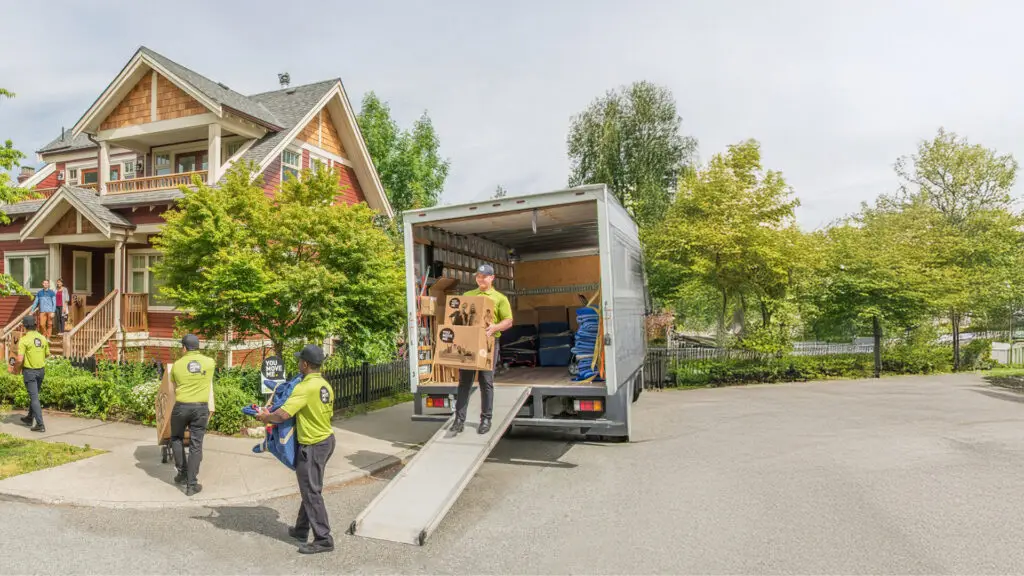
Look at the company’s website. Do they show their actual trucks, with their actual logo, in fleet photos? Or do they show generic stock photos of moving trucks?
Real movers are proud of their fleet. The trucks have a consistent paint job, the company logo, and usually photos of real crews standing next to them. Brokers tend to use stock photography because they don’t have a fleet of their own. Same goes for the crew. A real mover hires W-2 employees. A broker has no crew at all.
Why This Matters Most for Long-Distance Moves
For local moves, the broker problem is rare. Most local moving companies you find on Google or through referrals are real movers operating with their own trucks and crews.
For long-distance and cross-country moves, the broker problem is everywhere. A huge percentage of online quotes for interstate moves come from brokers, especially the ones at the top of search results with the lowest prices.
Why? Because brokers can underprice real movers. They quote a low number to win your business, then sell the job to whichever carrier will take it cheapest. The carrier shows up, looks at your stuff, and tells you the price has gone up. By that point, your belongings are loaded, you’ve already moved out of your old place, and you have no leverage left.
Why You Move Me Is Different
You Move Me is a carrier, not a broker. Every move we do is performed by our own employees on our own trucks. The team that estimates your move comes from the same company that loads it, drives it, and delivers it.
There’s no middleman and no surprise carrier showing up on move day. Our movers are W-2 employees, fully trained and certified in-house. Every truck in the fleet is clean, well-maintained, and clearly branded so you know exactly who you hired.
Pricing is hourly and all-inclusive, with a flat travel fee explained up front. No bait. No switch. Just the people you booked, doing the move you paid for.
Skip the Middleman. Book the Movers Directly.
The next time someone quotes you a number for your move, ask one question: who’s going to be at my door? If you want a straight answer the first time, get your estimate from us directly. Or call (800) 926-3900 and you’ll be talking to the same company that’s going to move you.